
Bricks breaker ace
PalebluedotStudioArcade
4.191.00 Reviews
- Version
- 1.7.1
- Installs
- 500.00K
- Age Rating
- Everyone
Screenshots
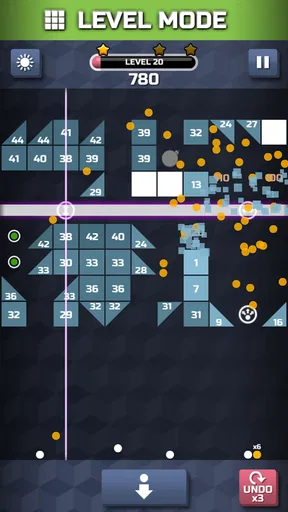
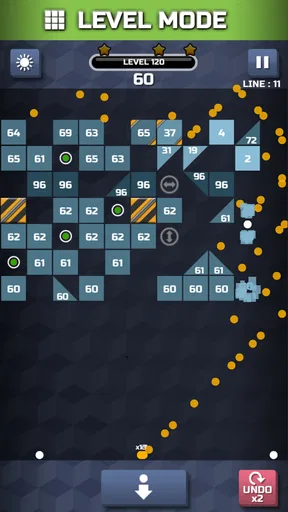
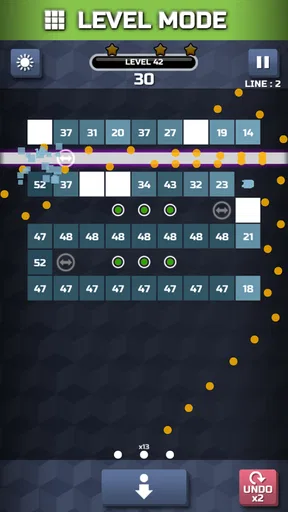
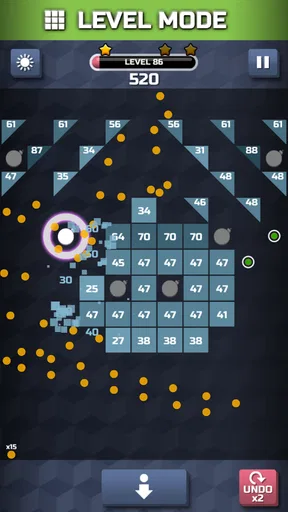
Our Review of Bricks breaker ace
 Analysis by Appyee
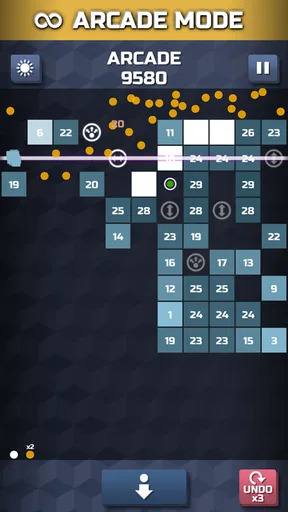
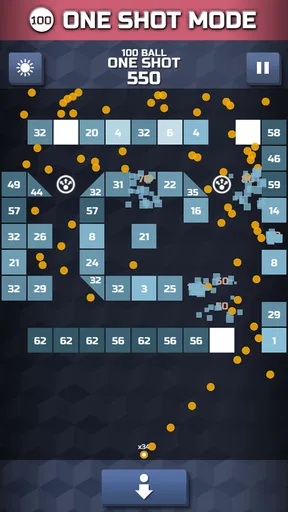
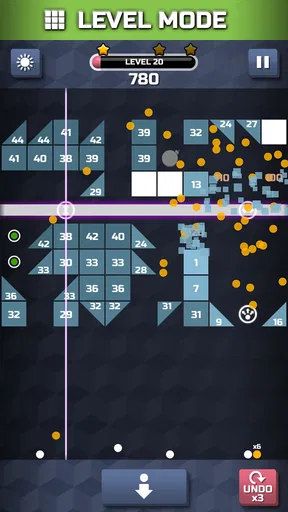
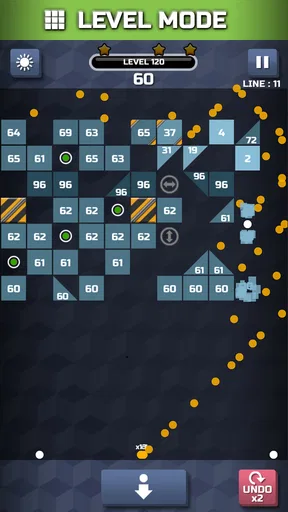
Bricks breaker ace is a free arcade game from PalebluedotStudio built around a simple idea: aim a ball, hit blocks, and keep the playfield under control. I found it easy to understand within seconds, but not so shallow that every round feels identical. The appeal comes from making small aiming decisions quickly, watching one shot travel through several blocks, and trying to turn a difficult layout into a manageable one.
That simplicity makes it a natural choice for short breaks. I can imagine opening it while waiting for a bus, taking a few turns during a coffee break, or playing longer when I want something repetitive but still mildly demanding. It is an arcade game rather than a story-driven experience, so the value is in the moment-to-moment challenge, not in characters, exploration, or a large world to discover.
How the game feels in everyday play
The basic loop is immediately readable. I choose a shooting angle, release the ball, and watch it bounce through the arrangement of blocks. The important decision is not simply aiming at the nearest target. I look for angles that let the ball travel across the field, strike several surfaces, and return with useful momentum. A direct shot can clear one obstacle, while a carefully chosen bank shot can change the whole shape of the next turn.
That makes the game more thoughtful than its short description suggests. The controls are easy to pick up, but good results depend on anticipating rebounds. When several blocks are lined up, I try to enter the group from a side that creates repeated contacts instead of stopping the ball after one hit. This is one of the first useful habits I developed: before firing, I scan for the longest possible route rather than focusing on the block that looks most convenient.
The other habit is patience. A fast tap may feel satisfying, but rushing the angle often leaves a dangerous row of blocks close to the bottom. I get better results when I pause briefly, trace the likely path, and consider where the ball will return. That small pause is especially useful on a phone, where a tiny change in finger position can produce a noticeably different trajectory.
For a casual player, the game works because there is no complicated setup before the action. I do not need to learn a long control scheme or remember a plot. I can play for a few minutes and stop without feeling that I have abandoned a mission halfway through. On the other hand, anyone looking for a rich arcade package with several distinct modes may find the focused design narrow after the novelty wears off.
Progress is more about decisions than spectacle
My enjoyment comes from improving the quality of each shot. The satisfying moments are not flashy rewards; they are the turns where a difficult board suddenly opens because the ball found a productive angle. That gives the game a quiet skill curve. At first I reacted to whatever block was closest. Later I started planning around rebounds, open lanes, and the position the ball would occupy when it returned.
This kind of progress is useful for players who like small, repeatable challenges. It is less suitable for someone who needs a strong sense of permanent advancement. The game’s central pleasure is replaying the same kind of problem with better judgement, not collecting a large set of abilities or building a long-term character.
There is also a pressure-management element. As blocks move toward the lower part of the screen, a safe-looking shot can become a poor choice if it leaves too many obstacles untouched. I learned to value shots that reduce the most immediate danger, even when they are not the most spectacular. Clearing a compact group near the bottom can be wiser than chasing a difficult rebound across the upper area.
That trade-off gives the arcade format a little more depth. I sometimes have to choose between a high-risk angle that could remove many blocks and a safer line that only makes gradual progress. The right option depends on the state of the board, so there is no single aiming habit that works every time. This is a concrete reason to keep watching the entire layout instead of treating each shot as an isolated action.
Three practical aiming habits that make a difference
First, I avoid aiming straight at the center of a block group unless the resulting rebound is clearly useful. Central impacts can look efficient but may send the ball back along a weak route. A side entry often creates more contact points and leaves a better angle for the return path.
Second, I check the landing position as carefully as the first impact. The opening collision gets most of my attention, but the end of the ball’s journey determines how much control I have on the next turn. A shot that clears several blocks yet returns to an awkward position may be worse than a slightly less powerful shot that comes back where I can use it.
Third, I treat open space as a resource. When the board contains a narrow channel, I try not to close it accidentally with a careless shot. Keeping one useful lane available can matter more than removing a single block immediately. This is the sort of detail that does not appear in a short store summary but becomes noticeable after several rounds.
Spending, fairness, and what I would expect before installing
The game is free to download, which makes trying it low-risk from a purchase standpoint. It is marked for Everyone, so its presentation is aimed at a broad audience rather than a mature niche. The current version is 1.7.1, and it runs on Android 8.0 or newer. Those details matter if you are using an older phone or deciding whether this is appropriate as a simple family-friendly time filler.
There are in-app purchases ranging from $0.99 to $99.99 per item. That is a wide span, so I would approach the purchase screen deliberately rather than tapping through quickly. The existence of optional purchases does not by itself tell me whether spending is necessary for progress, whether purchases remove interruptions, or whether they affect competitive outcomes. I would not assume any of those things without seeing the specific offer in the game.
For that reason, my practical advice is to play the free portion first and decide whether the core aiming loop is enjoyable on its own. If the basic rounds already feel rewarding, there is less pressure to spend simply to make the game worthwhile. If you dislike the central rebound-and-clear mechanic, a purchase is unlikely to solve that problem.
I also think the purchase range changes how I would hand the phone to a child. The Everyone rating describes the content audience, but it does not replace sensible device-level purchase controls. I would use the platform’s purchase protections and make sure the player understands that free installation and optional paid items are separate things. That is not a criticism of the game’s mechanics; it is a sensible precaution whenever a free title includes paid items.
Can the game feel fair without spending?
From the gameplay itself, the main source of success appears to be shot selection and board awareness. I can improve by studying angles, not by learning a complicated upgrade system. That gives the experience a fair-feeling foundation for solo play: a better result is connected to a better decision.
Still, I would separate “fair to play” from “fair in every possible purchase situation.” The available purchase facts show that paid items exist, but they do not establish how those items influence play. I therefore would not promise that spending is irrelevant, nor would I claim that it creates an advantage. The honest position is to enjoy the free loop first and inspect each offer before buying.
The competitive question is also limited by the kind of game this is. It is primarily a personal arcade challenge, so my concern is less about facing paying opponents and more about whether the game encourages me to spend when I am stuck. If a difficult board makes me impatient, I would close the purchase screen and try a different angle later. That keeps the decision tied to enjoyment instead of frustration.
Players who want a completely purchase-free experience should know this is not the cleanest match on paper because optional items are part of the product. Players who are comfortable ignoring extras may find the free entry point perfectly reasonable. The difference comes down to personal boundaries: some people enjoy a free arcade game as long as purchases can be skipped, while others prefer titles with no paid layer at all.
How it compares with familiar brick-breaker alternatives
Compared with classic paddle-based brick-breakers, this game puts more emphasis on choosing a launch angle and managing a bouncing ball than on moving a paddle under a falling ball. That changes the feel considerably. Traditional versions reward reflexes and horizontal positioning, while this style rewards planning a route through the blocks before the shot begins.
Compared with physics-heavy puzzle games, it is more direct. I do not need to manipulate a collection of objects or solve a long sequence of separate mechanisms. The challenge is concentrated in one action: selecting the best trajectory. That makes it easier to start, but it also means players who enjoy elaborate puzzles may miss the variety and experimentation found elsewhere.
It also differs from score-chasing arcade games that depend mainly on speed. Here, slowing down for a careful angle can be the stronger move. If I want a quick reflex test, another arcade title may suit me better. If I want a compact game where a few seconds of thought can improve the result, Bricks breaker ace is a better fit.
The trade-off is repetition. The focused design helps the game remain accessible, but it can also make sessions feel similar if I play for too long. I prefer it in short bursts, or in longer sessions when I am actively trying to improve my aiming choices. Someone seeking varied objectives, a narrative campaign, or a large collection of modes should look beyond this particular format.
Who should try it, and who should skip it?
I would recommend it to players who like calm, turn-by-turn arcade decisions, especially those who enjoy seeing a single well-planned action produce a chain of useful rebounds. It is a good candidate for an older Android device that meets the operating-system requirement and for anyone who wants a game that can be understood without a tutorial-heavy introduction.
It is also suitable for people who like improving through observation. The best results come from noticing patterns in the board and adjusting the next shot, not from memorizing a long list of controls. If you enjoy replaying a compact challenge until your judgement improves, there is enough here to make repeated attempts meaningful.
I would skip it if you need constant novelty or a deep progression system. I would also choose another game if paid items make you uncomfortable even when they can be ignored, or if you prefer competitive multiplayer with clearly defined rankings and opponent-based fairness. This is a focused solo arcade experience, and judging it by the standards of a large action game would lead to disappointment.
Popularity and my trust verdict
The game has passed 500 thousand installs and holds a 4.1 average from around 2.1 thousand ratings, with 91 written reviews. Those figures suggest that it has found a real audience, while the rating also leaves room for mixed experiences. I read that combination as a reason to approach it with realistic expectations: it is a straightforward arcade game with a recognizable appeal, not a universal replacement for every kind of mobile entertainment.
PalebluedotStudio keeps the product identity focused on the block-breaking idea, and that focus is both its strength and its limitation. I like that the central action is easy to understand and that careful aiming gives the game more substance than a one-tap distraction. I am less enthusiastic about the possibility of repetition and the broad range of optional purchase amounts, which means I would keep spending firmly under my control.
My final recommendation is cautious but positive. Install it if you want a free arcade game for short sessions and enjoy planning rebounds more than chasing elaborate rewards. Start with the unpaid gameplay, use the pause before each shot to inspect the full board, and judge the experience by how satisfying the decisions feel rather than by the promise of extra items. The strongest reason to play is the aiming challenge itself, not the spending layer.
In my experience, that is enough to make it worth trying for the right person. It will not replace a story game, a competitive action title, or a completely purchase-free alternative, but it does offer a familiar format with a useful layer of tactical judgement. If that balance sounds appealing, Bricks breaker ace is a sensible small download to test during an ordinary spare moment.
Verdict
Strengths of Bricks breaker ace
- Simple tap-to-aim controls are easy for players of all ages.
- Short levels make it convenient for quick gaming sessions.
- Brick layouts offer varied challenges as you progress.
- Offline play is useful when you have no internet connection.
- Power-ups can help clear difficult clusters of bricks quickly.
Limitations of Bricks breaker ace
- Later stages may feel repetitive despite changing brick formations.
- Precision aiming can be frustrating on smaller phone screens.
- Some power-ups may depend heavily on random drops.
- The game may become too easy after upgrading useful abilities.
- Ads can interrupt the flow between levels or after failed attempts.
Similar Picks in This Category
View All
Subway Surfers
SYBO Games4.6

Stickman Party 234 MiniGames
PlayMax Game Studio4.6

Subway Princess Runner
Ivy4.4

Temple Run
Imangi Studios4.2

Zombie Tsunami
Mobigame SAS4.6

Stack Ball - Crash Platforms
CASUAL AZUR GAMES4.5
Frequently Asked Questions
What is Bricks Breaker Ace and how is the gameplay?
Bricks Breaker Ace is a casual arcade game built around the classic brick-breaking formula. You launch balls toward numbered blocks, trying to clear as many bricks as possible before they reach the bottom of the screen. The main challenge comes from choosing the right angle, collecting extra balls, and using rebounds effectively. It is easy to understand, but later stages require planning rather than simply aiming at the nearest brick.
Is Bricks Breaker Ace free to download and play?
Bricks Breaker Ace can generally be downloaded and played without an upfront purchase, making it accessible for casual players who want a quick game. However, free mobile games may include advertising, optional in-app purchases, or both, depending on the version and platform. Before downloading, it is worth checking the store listing for current pricing, available purchases, and whether any paid items affect progression or are mainly intended to remove ads.
Does Bricks Breaker Ace work offline?
The core brick-breaking gameplay is usually suitable for playing without a continuous internet connection, which makes Bricks Breaker Ace convenient for short sessions while travelling or when mobile data is unavailable. Nevertheless, certain features may require internet access, including advertisements, cloud services, updates, leaderboards, or promotional content. Players should also remember that offline availability can vary between versions, devices, and regional releases.
Is Bricks Breaker Ace suitable for children and beginners?
Bricks Breaker Ace is relatively beginner-friendly because its controls are simple and the objective is explained through straightforward arcade mechanics. Players normally aim by dragging or adjusting a trajectory and then release to launch the balls. Even so, parents should review the app-store age rating and privacy information, particularly if children will use the game. Advertising, optional purchases, and online features may differ depending on the installed version.
Are there many levels or challenges in Bricks Breaker Ace?
The game is designed around repeated brick-clearing challenges, with layouts and block values becoming more demanding as the player progresses. Its appeal comes from improving each attempt, finding efficient angles, and surviving increasingly difficult arrangements rather than completing a story campaign. Depending on the version, you may also encounter missions, score targets, bonuses, or ranking features. Checking the latest store description is recommended because content can change through updates.
Play our best games!


